Tuesday, September 27, 2011

idea for comparative paper

"...comic books are by far the favourite reading matter of our soldiers and sailors, that some forty million comic books are sold a month, and that some seventy million people are estimated to read the newspaper comic strips everyday"
- Dwight Macdonald

there are prizes for film, music and traditional art, so why not comics? the most notable one in the west would be The Eisner Awards, dubbed the "Oscar" for comics (an award given out by Comic-Con International,
"a nonprofit educational organization dedicated to creating awareness of and appreciation for comics and related popular art forms, primarily through the presentation of conventions and events that celebrate the historic and ongoing contributions of comics to art and culture." )

Looking through the list of awards, some parallels to the Oscars may be drawn:
  • Best Graphic Album (best picture)
  • Best Writer/Artist (best actor/actress)
  • Best Coloring/ Best Lettering (best sound/ best graphics)
  • Best Reality-Based Work (best visual effects)
  • ...
There are also categories like
  • Best Publication for Kids
  • Best Publication for Teens
Tiny Titans, Best Publication for Kids(2011)

in the east, manga is the equivalent of comics, and awards are also given out. some notable ones are the Shogakukan Manga Award(jp), Kodansha Manga Award(jp) [prizes are valued around 1 million yen (USD 13,000)], or the Tezuka Award/Akatsuka Award [winners usually gain recognition and/or have their own weekly manga series published. (i.e.Weekly Shōnen Jump.)]

---------------------------

some comments
similarities with mass culture (agreements with Dwight MacDonald)
  • MacDonald talks about how Mass Culture "blurs age lines"(p.66). Perhaps this is true for comics as the graphic nature of comics makes it accessible and enjoyable by all. (ref to Best Publication for Kids, Eisner and the Children's Category for manga awards)
differences with mass culture (disagreements with Dwight MacDonald)
  • MacDonald claims that Mass Culture is manufactured wholesale, that the "serious artist rarely ventures" (p.59), yet the industry holds artistic value that is worthy of acclaim (ref to Best Penciller/Inker or Penciller/Inker Team, Best Painter, Best Coloring, etc.)
  • MacDonald states that Mass Culture creates masses which are "...a large quantity of people unable to express themselves as human beings because they are related to one another neither as individuals or as members of communities" (p.69). But events like ComicCon is strongly evident against this claim as many people still turn up to share ideas and interests, even to the extent of dressing up as their favourite characters (i.e. Cosplay).

Fans dressing up as their favourite characters at ComicCon 2006

other comments
  • on one hand it may be possible to capitalise on popular taste and exploit the masses as what Mass Culture is said to do, but on the other hand comics could be a form of expression of the people (representing popular taste) and hence it is as spontaneous as Folk Art, as Dwight MacDonald puts it "...autochthonous expression of he people, shaped by themselves".
  • the Eisner Award celebrates art and culture, and represents the combination of popular taste and artistic merit?

Wednesday, September 21, 2011

Hairspray Lensing Question

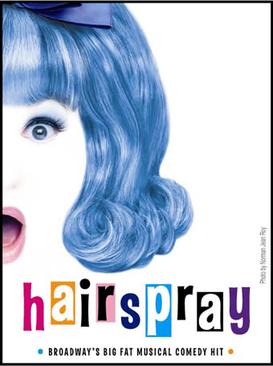
Hairspray(2002) Promotional Poster
John Street claims that the rules and conditions of a prize defines the type the winner the prize wants to be represented by (p.833). Does this explain the outcome of the 'Miss Teenage Hairspray' pageant as depicted in Hairspray(2007)?

In his article, Street manages to identify the different aspects contributing to a prize rhetoric and the factors that affect the outcome leading to the awarding of a prize. He states the key players of awarding the prize are the sponsorships, the culture industry, the prize organisers (p.827) and ultimately, the media, which provides coverage and publicity for the prize (p.831). From the 'Miss Teenage Hairspray' pageant, we can perhaps identify the elements that fulfils these roles. However, the politics behind a prize is usually more complicated because the reasons for awarding the prize is not publicly known, unlike the film which simplifies the politics to fit the narrative of the story.

Amber von Tussle (Brittany Snow) was usually the winner of the previous 'Miss Teenage Hairspray' pageants as she received a lot of 'help' from her mother, Velma von Tussle (Michelle Pfeffier). Velma, being the station's manager, controlled almost all aspects of the competition from the selection of candidates to the voting, and she reflects the power the prize organisers. Even though mass voting is a transparent way of empowers the masses to decide on the winner, the organisers usually have complete influence over the judging process. As depicted in the film, the small act of Velma manipulating the vote already shows how powerless the audience are should the organisers want a certain person to win.

The sponsorship is represented by Harriman F. Spritzer (Paul Dooley), whose decisions are in the interest of promoting and selling the 'Ultra Clutch' Hairspray, and to uphold the good image of the brand. Therefore, as long as the winner is able to bring publicity and commercial gain to the sponsor(p.828), it would not have mattered whether Amber of Inez (Taylor Parks) won. On the other hand, the sponsor could have threaten to pull out if the winner was not in favour of the sponsor.

The culture industry described by Street is most represented by the the TV station and The Corny Collins show, which aims to generate good publicity and to promote their TV channel. To play to the tastes of the major ethnic group at that time and the popular, ideal image of being slim and beautiful, none of the pageant's contestants were African-American or obese even though they had proven that they were better at dancing as compared to the contestants. This ensured that the winner would definitely be slim, beautiful and not African-American, a hidden criteria for evaluation. However, once it was understood that the public accepted racial integration, the TV station can now lift the hidden criteria and select winners without fear of public disagreement. Therefore like Street has mentioned, the expectations of the public reaction plays an important part in the decision of the winner.

Conveniently, the TV station doubles up as a media station, therefore its image and the amount of publicity is within the control of the TV station itself. By controlling what the audience sees, the TV station can choose to focus on certain contestants or portray them in good light, therefore influencing the outcome of the winner. Nevertheless, it was allowing Inez to dance for a few minutes and the removal of Velma's control over the results which led to Inez being crowned the winner of the 'Miss Teenage Hairspray' pageant.

Given a fair voting system and impartiality of the voters, perhaps it was expected that the winner is someone who is not 'manufactured' to fit the conditions the media(TV station) wishes portray, but rather a true winner whos talent is awarded on merit. Definitely not Amber von Tussle.